For years, hospitality marketing has been measuring campaign conversion rates, voucher redemption, bookings, covers, database size, social following and other lagging indicators.
Those metrics are easy to track. But here’s what they don’t tell you: whether your guests are returning more frequently, which is the single best indicator of whether you are winning.
The most critical growth metric: how often do your guests return?
Frequency is the single KPI that separates hospitality brands growing sustainably from those trapped in an endless, expensive cycle of customer acquisition. We have all seen the stat doing the rounds that 80% of new guests only ever visit once. That is madness. The brands that have dug into this are shaping their entire commercial sales and marketing strategy around increasing their average frequency for every guest segment.
Hospitality’s Costly Obsession with Acquisition
Most hospitality marketing teams are focussed on getting guests through the door. Which is fine, but so many of those new guests come, and never come again. It’s a leaky bucket, and a massive problem in hospitality where so many new guests are required every year in order to stay flat LFL!
Common acquisition channels:
- Paid social and Google Ads
- Third-party booking platforms
- Affiliates
- Influencer campaigns
- Seasonal promotions and discounts
- Awareness driven content
- Key dates/events/birthdays
These channels do matter for driving discovery, fill the top of the funnel, and introduce new audiences to your brand. However, acquisition is expensive, and it’s getting more expensive every year – so if 80% of those ‘acquired’ then only visit once, the investment will never stack up.
When growth relies on finding new customers, marketing costs spiral (and discounted covers explode). You’re paying premium rates to replace guests who never return. It’s a fragile growth model where performance depends entirely on ongoing spend; if you stop spending, you’ll stop growing.
Here’s the reality: acquisition should be one growth lever, not the entire growth strategy.
The real opportunity (and profit) lies in what happens after the first visit.
Why Frequency Changes Everything
Let’s look at a simple commercial truth for operators:
If a guest visits a venue twice a year instead of once, your revenue from that guest doubles without doubling your acquisition cost. This is the power of frequency.
Across hospitality groups in the UK, even modest increases in visit frequency deliver outsized revenue impact. The data consistently shows:
- Marketing opted-in guests visit 0.3–0.7 more times per year
- Loyalty program members visit 0.5–0.8 more times per year
On the surface, those numbers might seem small. But across a database of hundreds of thousands or millions of guests, they translate into substantial revenue growth without requiring a proportional increase in marketing spend. The average visit frequency hovers around 1.3 visits per year in casual dining, so an increase from 1.3 to 1.5 visits per year is worth literally millions of pounds for multi-site chains.
This is what makes frequency such a transformative KPI. It directly improves:
- Revenue per guest: more visits mean more spend per year
- Marketing efficiency: lower cost and less discounting per visit
- Customer lifetime value: longer, more profitable relationships
- Overall profitability: Retention costs far less than acquisition
Unlike acquisition metrics that reset every month, frequency compounds over time. Each additional visit strengthens the relationship between guest and brand, making future visits more likely and progressively less expensive to generate. We can see in the data that once a guest has visited 3 times, they are far less likely to ‘lapse’ and become part of the ‘lost’ guest segment, and those who leave a review score of 8 to 10 (out of ten), return sooner and return more often.
It’s the closest thing hospitality has to a growth flywheel.
Why Most Brands Struggle to Improve Frequency
If increasing repeat visits is so valuable, why aren’t more hospitality brands investing more time and effort in it?
Because most don’t have the infrastructure to drive frequency intentionally.
The issues include:
- Fragmented across booking platforms, POS systems, CRMs, Wi-Fi logins, and email tools
- There is no automation set up for 2nd visit, 3rd visit, 10th visit in X time etc.
- Guest feedback and order data is not used in the next brand comms that get sent out to a guest
- No personalised offers or rewards based on purchase behaviour (do they have kids, like wine/cocktails etc)
This is precisely where the choice of restaurant marketing software becomes critical. Without the right tools, you’re flying blind—unable to see patterns, identify opportunities, or respond intelligently to guest behaviour in order to nudge frequency upwards for each cohort or type of guest.
Without a unified view of each guest, and automations to nudge their visit frequency, influencing behaviour in a meaningful way becomes nearly impossible.
As a result, most operators:
- Don’t know who their highest-value guests actually are
- Can’t identify lapsed regulars before they’re gone for good
- Send generic, blast-style campaigns that feel impersonal
- Rely heavily on one-off promotions that train guests to wait for discounts
- Treat first-time visitors and loyal regulars exactly the same
When communication lacks relevance and timing, it fails to drive action. Frequency becomes accidental rather than a deliberate strategy. And yet, turning 80% of visitors into frequent guests who come back multiple times is game changing, for any brand.
From Campaigns to Guest Growth Engines
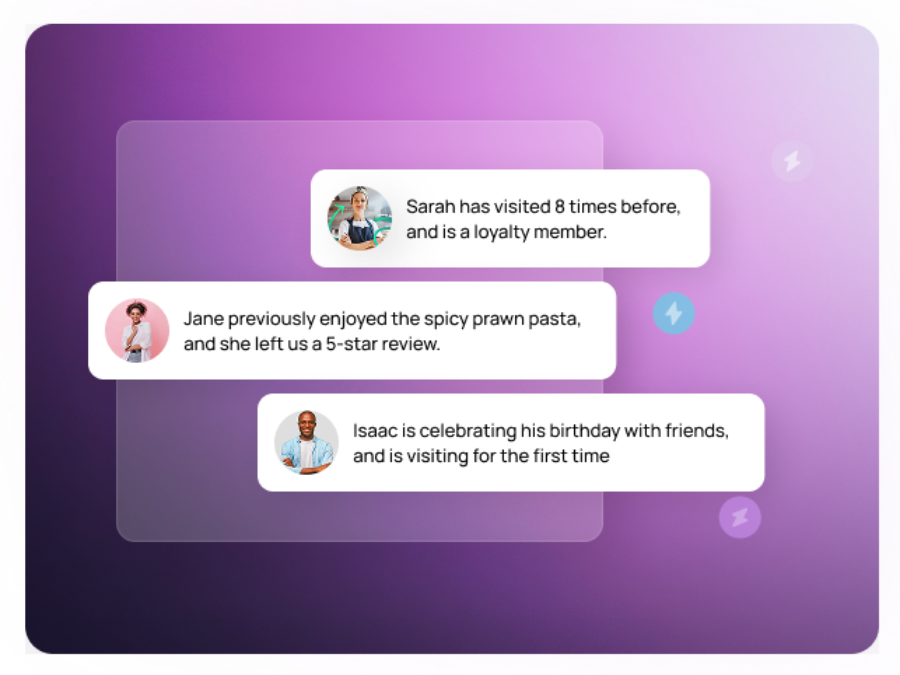
The most advanced hospitality brands are moving away from batch and blast marketing, towards a single view of the guest and personalisation at scale. This approach treats guest data as a core commercial asset and uses it to systematically increase visit frequency through intelligent, automated engagement.
Instead of relying on sporadic promotional blasts, these operators build systems that continuously encourage the next visit. Modern marketing software for restaurants enables this shift by connecting guest data across touchpoints and automating personalised engagement at scale.
This includes:
- Personalised post-visit follow-ups that thank guests and invite them back.
- Re-engagement of lapsed guests with timely, relevant offers.
- Automated reminders based on past behaviour and preferences.
- Targeted offers aligned with individual guest profiles and visit patterns.
- Smart segmentation that delivers the right message to the right guest at the right time.
- Gathering of preference data like favourite location, birthday, key other anniversary, do they like sports or music etc.
The best software for restaurants makes these automated journeys possible without requiring constant manual effort from the marketing. Rather than building one off campaigns for every single use case, you create intelligent systems that work continuously to bring guests back.
These actions may seem incremental individually, but collectively they create a consistent rhythm of engagement that keeps your brand front-of-mind and drives measurable increases in frequency.
The result isn’t just more bookings. It’s more repeat bookings from known guests which is precisely where true profitability lives.
The Evolving Role of Third-Party Platforms
None of this means third-party platforms are becoming irrelevant.
Google, Meta, TikTok, OpenTable, and other discovery channels remain essential for:
- Brand visibility and awareness
- New guest acquisition at scale
- Market reach and audience targeting
- Strategic re-engagement campaigns
They’re powerful tools for filling the funnel and introducing new audiences to your venues.
But they shouldn’t own the entire relationship.
Their role is to help you connect with genuinely new and high potential guests. The marketing team, using the right tech, can then ensure those guests come back again, without paying a commission or ad fee for every subsequent visit.
Once a guest has visited for the first time, the objectives shift immediately from acquisition to retention. The goal becomes capturing their data, building brand recognition, and creating compelling reasons to return through your own channels. Making them feel valued, appreciated and known.
This is where restaurant marketing software delivers its greatest value; ensuring you own the relationship after that crucial first visit and are able to build it using software, rather than manual effort.
This is where frequency is built. This is where margins improve. This is where sustainable growth happens.
Learning from Other Industries
Operators in other industries are focussed on lifetime value, not one off booking conversion metrics.
They prioritise:
Capturing guest data at every opportunity – Every touchpoint from online, to email, to in venue observations by the front of house team becomes an opportunity to understand the guest and build a rich profile.
Unifying guest information across systems – Data from multiple platforms is consolidated into a single, actionable view that enables genuine personalisation at scale. This is where AI software for restaurants is beginning to make a real difference, identifying patterns and opportunities that would be impossible to spot manually.
Automating intelligent, timely engagement – Guests receive relevant communications and offers that encourage their next visit at precisely the right moment. Quality marketing automation for restaurants handles the timing and triggering automatically, ensuring consistency without requiring constant oversight.
Measuring what actually matters – The primary KPI shifts from vanity metrics like total bookings or impressions to meaningful indicators such as:
- Average visit frequency per guest
- Repeat visit rate
- Guest lifetime value
- Revenue per guest over time
This shift in measurement drives a fundamental shift in behaviour, and significantly stronger commercial outcomes.
The Technology Foundation That Makes It Possible
None of this frequency focused strategy works without the right tech foundation.
The difference between generic batch emails and intelligent, frequency driving communication comes down to infrastructure. When your marketing software for restaurants can see the complete guest picture (visit history, preferences, spending patterns, engagement behaviour) it can automate the precise interventions that bring guests back.
This isn’t about replacing human judgment. It’s about scaling the thoughtful, personalised approach that great operators have always used, making it work consistently across thousands of guests.
The Future of Hospitality Growth
Hospitality is entering a new era where success will be defined not by how many total bookings you generate, but by how often guests choose to return.
In this future:
- Marketing becomes retention led, not acquisition reliant
- Guest data transforms from admin burden to core commercial asset, more data = more revenue = more growth
- Technology enables personalisation at scale without sacrificing the human touch
- Direct relationships drive sustainable, profitable revenue growth for brands, reducing the reliance on third party affiliates or aggregators
The brands that win this decade won’t necessarily be those spending the most on acquisition. They’ll be the ones building the strongest, most consistent relationships with their guests, and systematically increasing frequency year after year through software delivered personal attention.
In hospitality, there is ultimately one KPI that matters more than any other for profitable growth: how often your guests come back.
The best part is that you probably already have most of the guests you need to grow. You just need to bring them back more often.
If you’re ready to measure and drive repeat behaviour more intentionally, learn how Guestwise helps brands unlock incremental growth at guestwise.tech.